
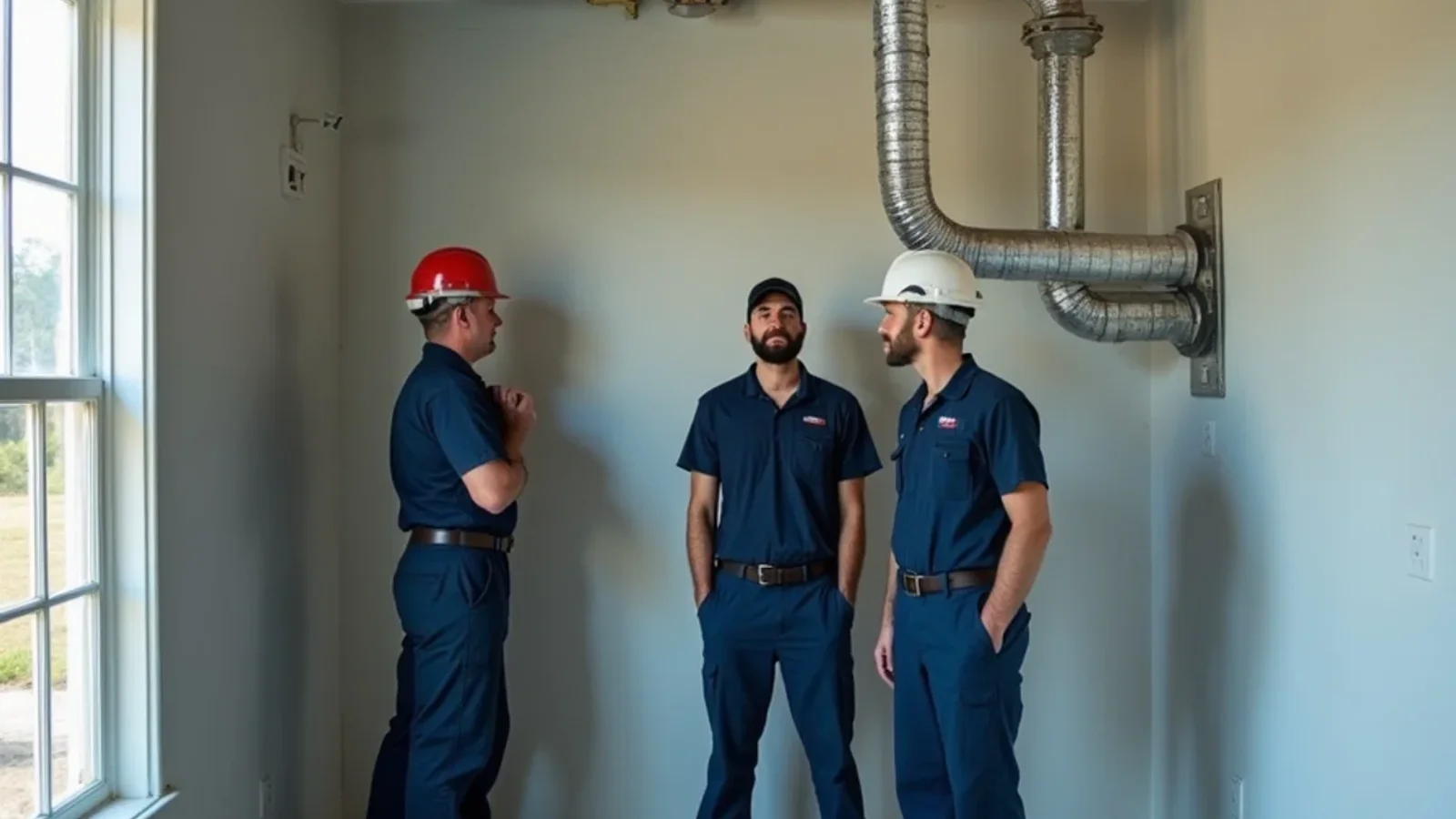
Recognizing the Critical Signs of Structural Drying & Dehumidification in Central Florida Properties
Trapped moisture within structural building assemblies represents the most insidious consequence of water damage in Central Florida. Long after standing liquid is extracted from flooring surfaces, thousands of pints of water remain deeply bound inside gypsum drywall cores, wood framing studs, subfloors, and monolithic concrete foundation slabs. In Orlando's subtropical climate, surfaces may appear dry to the eye and touch while moisture content inside wall cavities remains at dangerously saturated levels above 25% wood moisture equivalent (WME). When unaddressed, bound moisture causes drywall to lose structural integrity, baseboards to warp and crown, wood floor joists to rot, and microscopic mold spores to germinate within 48 hours. Professional structural drying orlando services utilize advanced psychrometric science—the physics of air temperature, humidity, and vapor pressure—to actively draw moisture out of building materials and restore them to their dry baseline without destructive demolition.
Primary Moisture Triggers & Structural Vulnerabilities in Orlando
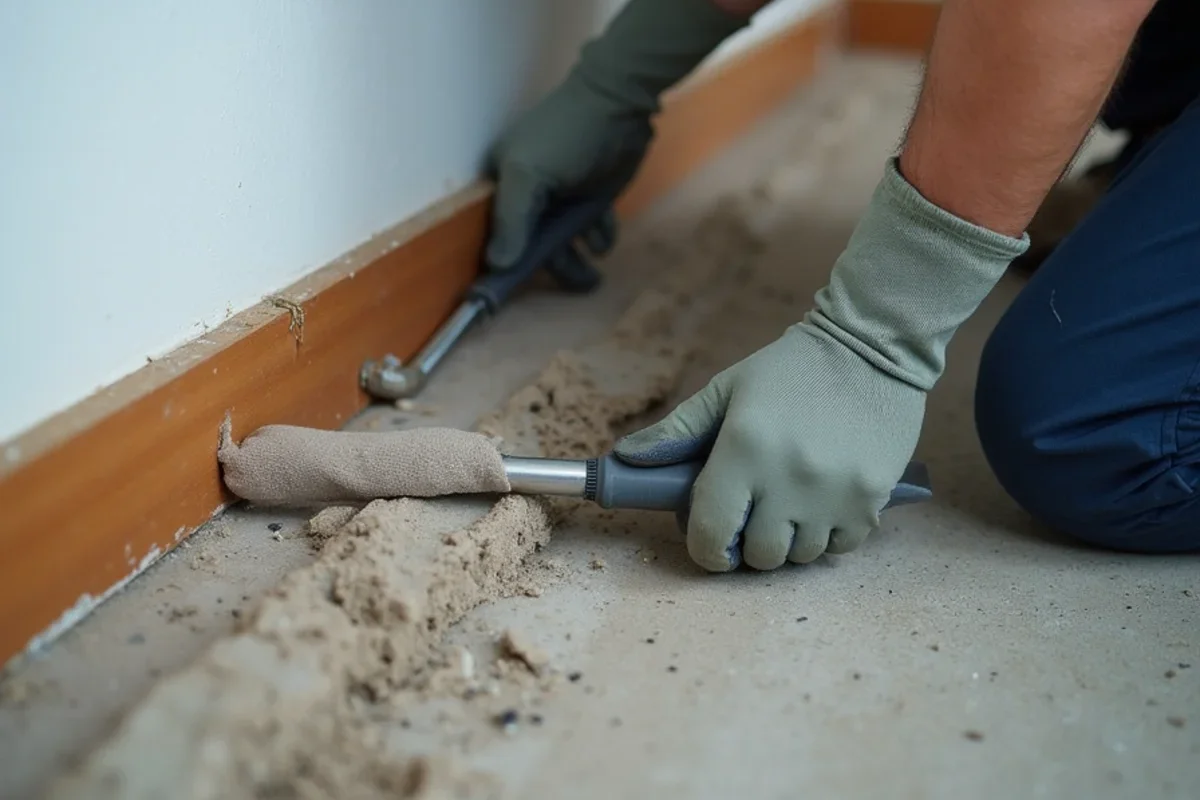
Central Florida's atmospheric climate and prevalent construction methodologies present extreme challenges to natural structural drying. During the June through September rainy season, ambient outdoor relative humidity in Orlando routinely hovers between 80% and 95%, with temperatures exceeding 90 degrees Fahrenheit. Under these high-humidity conditions, natural evaporation stalls completely because the air is already saturated with moisture vapor. Furthermore, the vast majority of residential homes in Orange, Seminole, and Osceola counties are constructed on monolithic slab-on-grade concrete foundations. Concrete is inherently porous; when water penetrates a home, the concrete slab wicks moisture horizontally and vertically, holding gallons of water that slowly migrate into sill plates, drywall, and luxury vinyl or hardwood flooring. In historic Orlando districts such as Winter Park and College Park, dense plaster walls and tongue-and-groove hardwood over old timber framing hold moisture even more stubbornly, requiring specialized low-grain psychrometric intervention to avoid irreversible material degradation.
Need Emergency Structural Drying & Dehumidification in Orlando?
Our live emergency dispatchers answer 24 hours a day, 7 days a week. We deploy certified technicians with specialized moisture mapping and drying equipment immediately.
Advanced Diagnostic Inspection, Thermal Imaging & Moisture Mapping
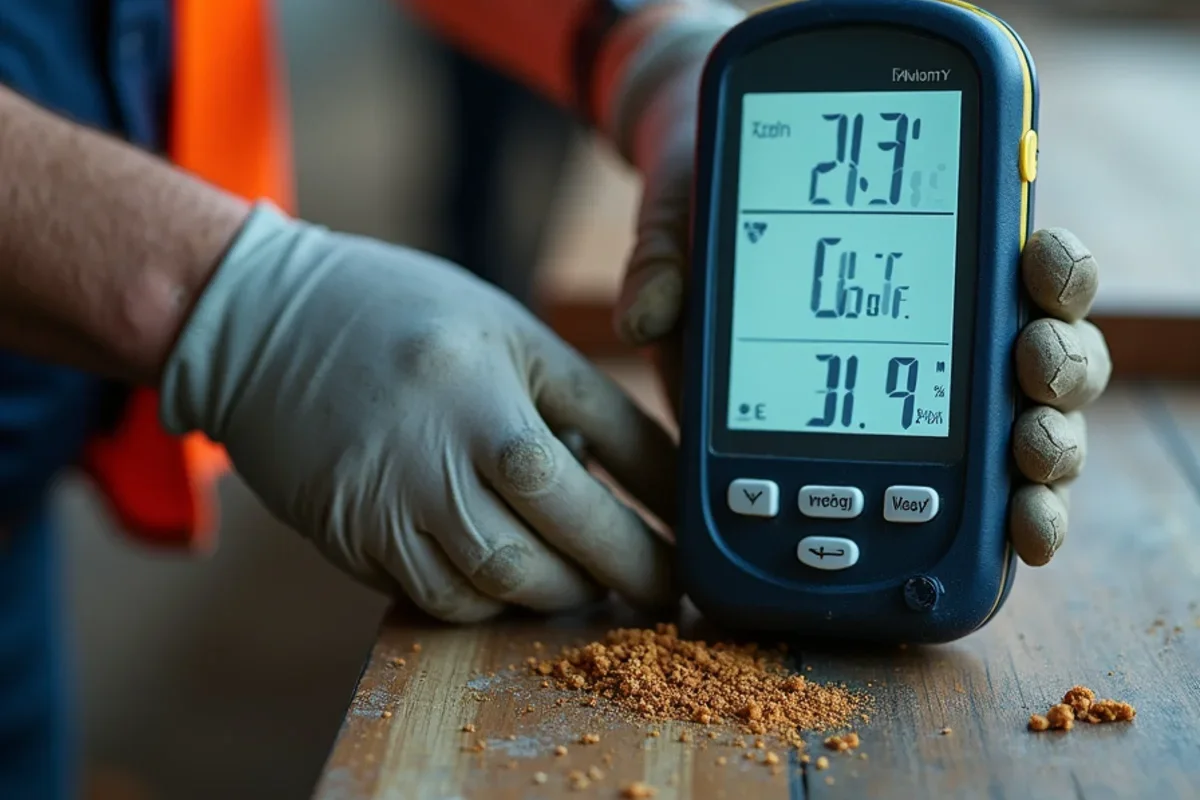
Our structural drying protocol begins with a rigorous psychrometric audit of your property. Certified technicians deploy calibrated digital thermo-hygrometers to measure ambient air temperature, relative humidity (RH), dew point, and specific humidity measured in grains per pound (GPP) across every affected room and an unaffected reference zone. We utilize high-resolution FLIR infrared thermal imaging cameras to identify evaporative cooling patterns that reveal hidden moisture pathways behind interior drywall and beneath floor coverings. Pin and pinless electronic moisture meters are then calibrated to specific building substrates—gypsum drywall, yellow pine framing, concrete subfloors, and oak hardwood—to document baseline moisture content percentages (MC%). Every data point is recorded on a digital floor plan to establish the initial drying curve and guide precision equipment placement.
Step-by-Step Protocol for Professional Structural Drying & Dehumidification
Comprehensive Psychrometric Baseline Survey
Technicians record indoor and outdoor temperature, relative humidity, dew point, and grains per pound (GPP) alongside substrate moisture content to determine the exact moisture load.
Erection of Controlled Drying Chambers
We construct airtight polyethylene containment barriers to isolate affected wet chambers from unaffected living areas, maximizing dehumidifier efficiency and reducing cubic volume.
Strategic Air Mover Vortex Placement
High-CFM axial air movers are positioned at calculated 45-degree angles along wall perimeters, sweeping high-velocity airflow across wet surfaces to disrupt the boundary layer of saturated air.
LGR & Desiccant Dehumidifier Deployment
Commercial Low-Grain Refrigerant (LGR) dehumidifiers are installed within the drying chamber, chilling incoming air below its dew point to condense and pump out dozens of gallons of water vapor daily.
Specialized Cavity & Floor Mat Injection Drying
For trapped moisture behind baseboards, beneath kitchen cabinets, or within hardwood flooring, we deploy pressurized injection systems and vacuum floor mats that force dry air directly into structural cavities.
Daily Moisture Monitoring & Dry Standard Clearance
Technicians visit daily to measure grain depression (the difference between ambient air and dehumidifier exhaust GPP) and record substrate readings until every material meets verified dry standard.
Psychrometric Drying Timelines & Equipment Deployment
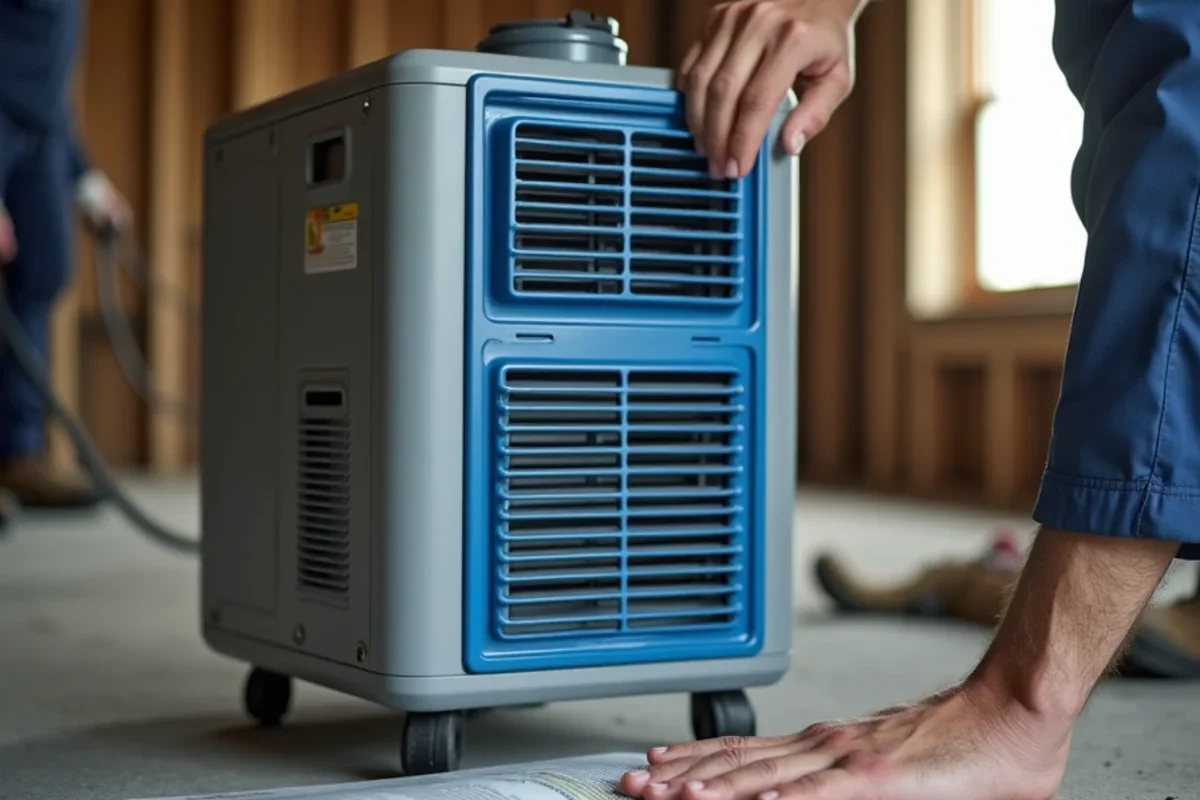
Achieving complete structural drying in Central Florida requires commercial-grade psychrometric machinery designed to operate in extreme heat and humidity. Conventional household dehumidifiers freeze up or cease moisture removal when relative humidity drops below 50%. In contrast, our fleet of industrial Low-Grain Refrigerant (LGR) dehumidifiers can extract over 150 pints of moisture per day while continuing to draw water vapor down to deep grain levels below 35 GPP. Paired with high-velocity axial air movers delivering 3,000 CFM each, this equipment creates a powerful vapor pressure gradient: moisture inside wet materials is pulled outward into the dry air and immediately condensed into liquid by the dehumidifier coils. When dealing with saturated sub-slab concrete or dense historic hardwoods in homes near Lake Eola or Winter Park, we deploy desiccant dehumidifiers and specialty floor mat extraction grids that pull deep moisture out of cellular wood fibers without requiring premature tear-out.
Insurance Documentation, Line-Item Scopes & Florida Compliance
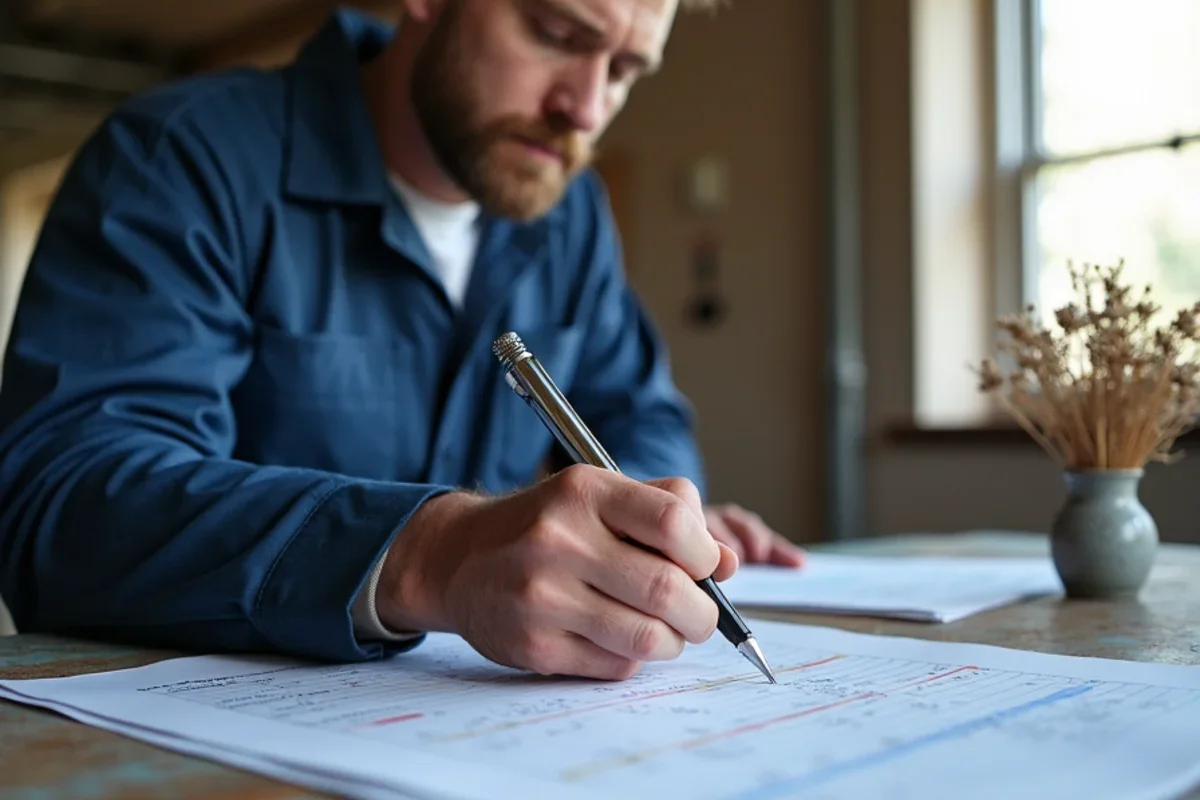
Thorough psychrometric documentation is the cornerstone of a successful property insurance claim in Florida. Under post-2023 Senate Bill 2-A reforms, property owners must demonstrate that structural drying was managed scientifically under ANSI/IICRC S500 guidelines. We do not solicit Assignment of Benefits (AOB) agreements or act as public adjusters; instead, we provide you and your carrier adjuster with comprehensive, incontrovertible drying logs. Our daily documentation packets include psychrometric chamber logs tracking daily GPP reduction, moisture mapping charts for all framing and drywall substrates, time-stamped thermal imaging progression scans, and equipment runtime verifications formatted directly in Xactimate. This rigorous documentation ensures your carrier receives proof of complete dry standard clearance, protecting your home's structural integrity and preventing mold-related claim disputes.
Frequently Asked Questions About Structural Drying & Dehumidification
Specific answers addressing timelines, costs, insurance coverage, and Florida regulations.
Ready to Begin Structural Drying & Dehumidification?
Connect directly with our Orlando dispatch desk. We arrive equipped to stabilize your property and stop water damage from spreading.